

Embraer: the New Era of Aviation

Embraer has built global leadership in the regional and executive jet segments and is now betting on Eve to transform the way urban travel takes place.
Theo Tabach (Senior at GN Poli)

Founded in 1969, Embraer has become, over a little more than five decades, the backbone of the Brazilian aeronautics industry. It has already delivered thousands of aircraft to more than 100 countries and states that over 90% of its production is exported. As a result, in the domestic market it acts practically as the only major national manufacturer, while running an essentially international business. Abroad, over recent decades it has consolidated a leading position in the regional segment, and today it is the world's third-largest manufacturer of commercial jets. As a historic milestone, the E-Jet family came to hold about 80% of the North American market for mid-size aircraft in certain periods.
Embraer is organized into three main fronts: regional and short-haul jets, which have historically accounted for the largest volume of units delivered; executive aviation, which has been growing in revenue and margin in recent years; and defense/services. In its most recent reports and announcements, the company has highlighted both the increase in executive jet deliveries and large commercial orders and support contracts.
In practice, the commercial and executive businesses follow different strategies. In the commercial segment, Embraer focuses on right-sized aircraft for regional airlines and short- to medium-haul routes. In executive aviation, it competes with models such as the Phenom 300 and the Praetor 500/600, serving fractional operators, corporations and fleet operators.
Looking ahead, the company plans to expand production and modernize its commercial portfolio, as well as sustain the growth of its executive jets and services division. It also seeks to diversify its activities into new areas, such as urban air mobility. To that end, it recently announced plans to invest around R$20 billion by 2030. Given the transition from combustion to electric vehicles and the mobility challenges in large cities such as São Paulo, one of its bets is Eve, a subsidiary dedicated to this segment.
But how does Embraer intend to bring about this transformation?
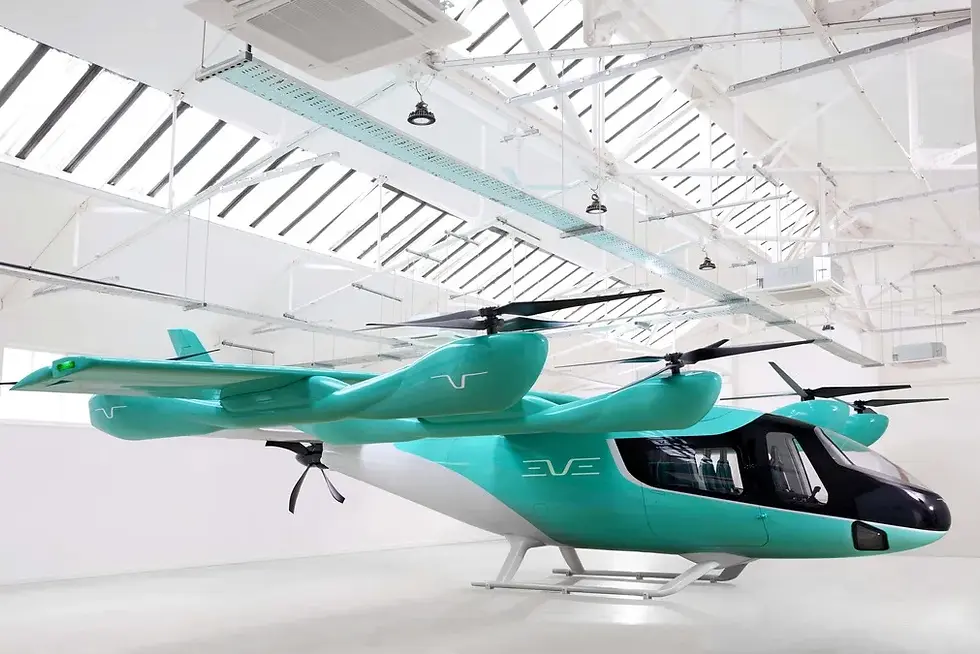
Eve Air Mobility, focused on developing electric vertical take-off and landing (eVTOL) aircraft, carried out a direct share offering of approximately US$230 million in August 2025. In the transaction, more than 47 million common shares were issued at US$4.85 each, giving the company a significant cash boost to finance the certification process for its vehicles, technological development and other operating expenses. As part of the strategy, Eve also pursued a dual listing, enabling BDRs (Brazilian Depositary Receipts) on B3, which paved the way for Brazilian investors to participate more directly in the business.
Embraer's involvement was central to this capital raise. In addition to being Eve's controlling shareholder and strategic partner, Embraer was one of the investors that took part in the offering, signaling confidence in the project and helping to attract other institutional participants. This support is not limited to financial backing: Embraer provides infrastructure, certification know-how and experience in the aeronautics sector, factors that increase Eve's credibility with investors and regulatory authorities.
With this transaction, Eve not only strengthened its capital, but also consolidated its presence in the Brazilian capital market, complementing its existing listing in the United States. For Embraer, the move reinforces its position as one of the world leaders in the transition to sustainable and urban aviation, broadening its innovation ecosystem and securing a direct stake in a segment with the potential to transform air mobility in the coming years.
A Closer Look at eVTOLs
An eVTOL (electric Vertical Take-Off and Landing) is an electric aircraft capable of taking off and landing vertically, combining the practicality of a helicopter with the efficiency of electric motors. Designed to be quieter, more sustainable and more economical, it is seen as a solution for urban air mobility, offering fast transportation of passengers or cargo over short distances, especially in large, high-traffic cities. Globally, the eVTOL sector has attracted major investments from aircraft manufacturers, technology companies and venture capital funds, with notable projects in the United States, Europe and Asia.
Trends indicate that these vehicles are likely to be used as urban air taxis, in short-distance regional transportation, in fast-delivery logistics operations and even in emergency situations. At the same time, governments and aviation authorities are already working on specific regulations to enable the certification and integration of eVTOLs into the airspace, establishing them as one of the expected pillars of the sustainable aviation of the future.
A relevant example is the U.S.-based Joby Aviation, which received significant investments from Toyota, both in capital and in engineering and manufacturing support, and today ranks among the global leaders in the race to launch commercial electric air taxi services.
Market Cap - Players in the eVTOL Segment (Billions of Dollars):

Although it still has a modest share of the sector, Eve shows great growth potential in Brazil, especially if eVTOLs establish themselves as a viable and attractive alternative for transporting passengers and small cargo.


