

Krispy Kreme: The Strategy Behind the Expansion of the American Donut Giant

The opening of its first store is already drawing a lot of attention, with an action plan that appears successful at first glance.
By Theo Tabach (Junior at the Group)
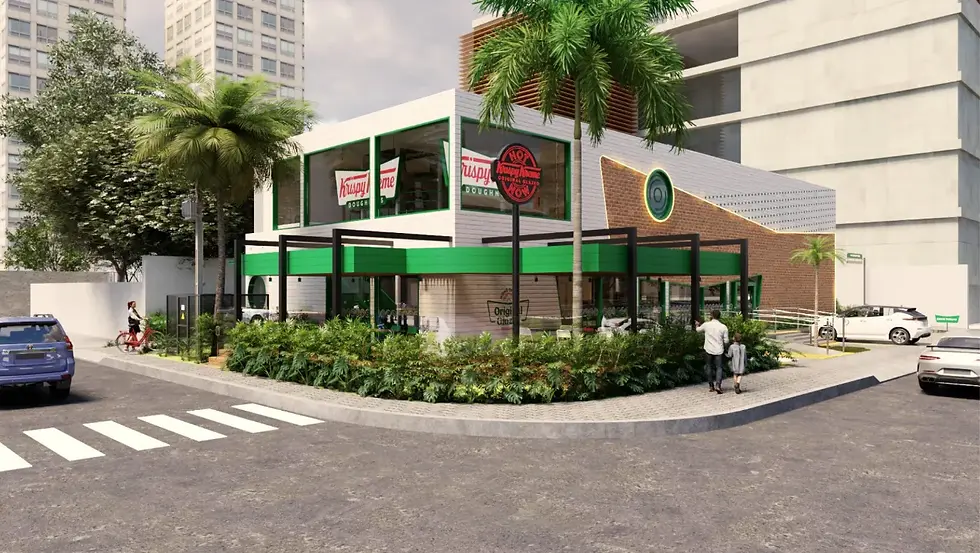
For those who pass along Av. Juscelino Kubitschek every day, it is impossible not to notice the bustle around the new establishment on the avenue, which offers a product unusual in the Brazilian routine. Krispy Kreme, the American donut brand, recently arrived in Brazil, near one of São Paulo's largest business hubs, the Faria Lima area, with the goal of consolidating the Brazilian donut market. But how did this entry come about?
The American company carried out this expansion through a joint venture with am/pm, the convenience store chain at Ipiranga gas stations and one of the largest in the country. The intention, in addition to supporting local operations, is to replicate the model used in the U.S., where the brand sells its donuts in convenience stores such as 7-Eleven, Tesco and Walmart, which helps spread the brand and make its products part of Americans' daily routine.
In addition, a strong marketing strategy was implemented to attract São Paulo consumers. Thousands of boxes of donuts were handed out for free at strategic locations in São Paulo, such as Av. Paulista and Berrini Station. The campaign, similar to a free sample, drew a lot of local attention, generating long lines.
Despite the good start to its operations in Brazil, caution is still needed. Many American companies that tried to open franchises in the country ended up pulling out due to problems with their business model. One example is Starbucks, which in Brazil belongs to the management firm SouthRock. In October 2023, the company filed for judicial reorganization, citing debt of R$1.8 billion. According to the company, the situation stems from the low level of confidence and high economic instability in Brazil, indicating that it was unable to adapt to the volatility of the Selic rate and persistent inflation.
As a result, it had to sell its Brazilian Starbucks and Subway operations to Zamp, the company that runs Burger King and Popeyes in the country.
Franchise longevity in Brazil (Sources: G1 and Uol)

Currently, Dunkin’ Donuts still operates in Brasília and Goiás, but it left São Paulo in 2005, when it exited the country. With the arrival of Krispy Kreme and its possible success, the competitor's return to the São Paulo capital may happen in the near future, since the brand's comeback in 2015 was aimed precisely at winning over the Brazilian market.
The entry of international franchises is quite common in Brazil, given its territorial reach and large number of consumers. However, specific knowledge of the country is required — both from a macroeconomic standpoint, due to high economic instability, and regarding the characteristics of Brazilian customers.
Krispy Kreme appears to be off to a promising start, managing to attract consumers in Brazil, especially a high-income audience, given its strategic location near the Faria Lima area. However, considering the track record of other franchises, it is still too early to say whether this expansion will be a lasting success.


