SAFs: Connecting Brazilian Football to the European Ecosystem

OutField in the SAF strategy: management at Coritiba and a European showcase at Le Mans
By Rhuan Caldeira (Junior at the Group)

The Sociedade Anônima do Futebol (SAF, or Football Corporation) is a corporate model provided for by law that allows Brazilian clubs to adopt a business structure, with rules on governance, accountability and fundraising. In practical terms, this arrangement separates the football department from the social club, reduces short-term interference and creates conditions for multi-year planning, with clear targets and greater professionalization.
The financial and governance axis becomes more predictable when the club-company manages to attract stable capital. In this context, it is worth explaining directly what Equity is: it is the investment made by partners or shareholders who acquire a stake in the company. Unlike a loan, Equity does not generate fixed installments to be paid; the investor takes on risk alongside the club-company and shares in the results. In football, this type of capital usually makes medium- and long-term projects possible, such as infrastructure improvements, player development, process modernization and the adoption of performance metrics.
This is the environment in which OutField operates. Founded in 2020 and, since 2024, with Spectra as a partner, the firm takes part in deals with Brazilian clubs, such as Coritiba, and develops financial solutions aimed at turning more predictable future revenues into present resources, with oversight and controls. In addition, it invests in businesses within the sports and entertainment ecosystem, connecting operations, audience and value creation.
OutField's presence in the SAF universe gained substance through its partnership with Treecorp, Coritiba's controlling shareholder. In April 2025, Lucas de Paula, a partner at OutField, took over as the club's CEO. Treecorp remained in corporate control, while OutField began to lead the execution of the plan. In practice, this means instituting more rigorous governance routines, improving budgeting and the monitoring of indicators, reorganizing commercial fronts and adopting a culture of accountability that allows for quick course corrections.
On the financial front, the guideline is to preserve predictability and cash balance. The club uses operations that are common in the sector to anticipate receivables and smooth out cash flow fluctuations, with contractual transparency and well-defined debt limits. On the sporting side, priorities include reorganizing the technical structure, optimizing the payroll, giving more minutes to young players and an unequivocal goal for fans and investors: to return to Série A sustainably, avoiding opportunistic solutions that would jeopardize the following season.
Abroad, Le Mans, in France, occupies a strategic place in this construction. The club was promoted to Ligue 2 (the French second division) in 2025 and has relevant commercial attributes, including a strong local connection with motorsport, which broadens branding and hospitality opportunities. In August 2025, OutField's entry into the club's capital was announced, alongside well-known names from sports and entrepreneurship. For the firm, this means establishing a presence in Europe consistent with its activities in Brazil through Coritiba, opening a path for sporting and commercial value creation on two complementary fronts.
The strategy is structured in clear stages. First, develop players and give them minutes in Brazil, in an environment that favors technical and tactical development. Next, manage the transition to Europe in a controlled and planned way, in a competitive league with clear rules. Once performance is consolidated, seek a sale within the European market itself, where pricing is in euros and player comparisons follow widely accepted metrics. In other words, Le Mans tends to function as the European link in this route, while Coritiba concentrates the development and initial exposure stage. For investors, the proposal is to capture value appreciation in the European environment, which generally offers greater liquidity and more stable price benchmarks.
This move is not unprecedented in international football. Large groups already operate networks of clubs with a similar logic. Conceptually, the mechanism works when there is coordination between management, working methodology and the sporting calendar, reducing intermediation frictions and aligning incentives between the sporting and financial dimensions. The goal is to better control each stage of the cycle: develop, provide minutes, showcase, negotiate and reinvest.
The sequence is clear. The SAF organizes the structure and raises the governance standard. Long-term capital, in the form of Equity, makes projects possible and reduces dependence on emergency solutions. OutField occupies the operational layer in Brazil and, with Le Mans, creates the European channel for realizing value. When these pieces act in a coordinated way, the club is better positioned to plan, invest and sell, with lower volatility and a greater ability to measure results over time.
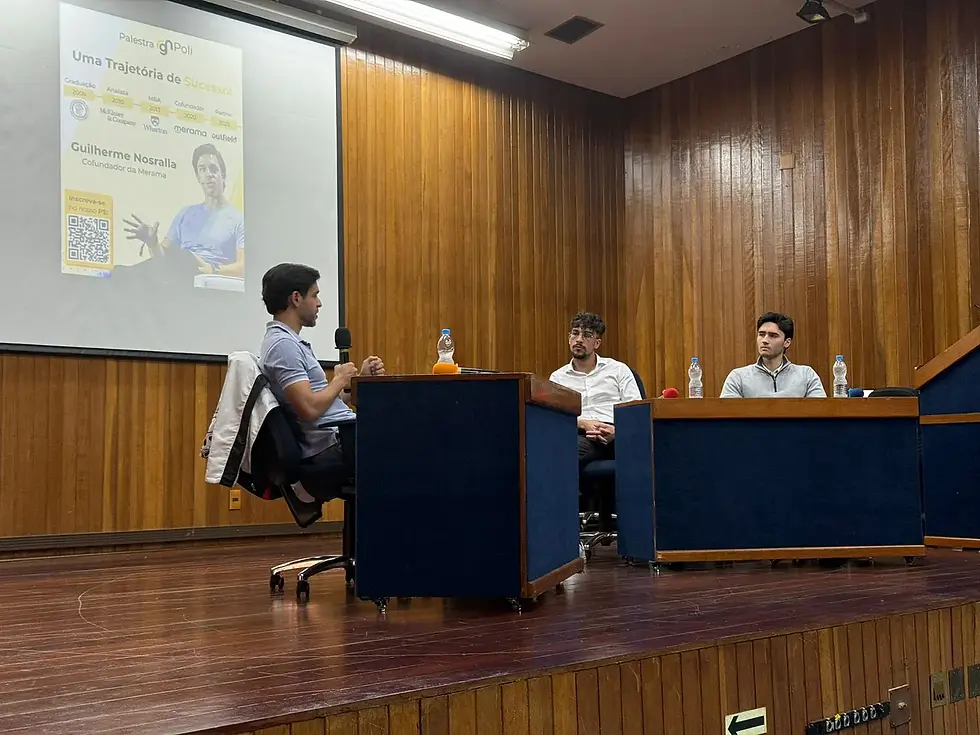
The essence of this rationale was expressed by Guilherme Nosralla, a partner at OutField, in a talk at the Grupo de Negócios da Poli (08/05/2025): develop in Brazil, take them to France and sell in Europe. Broadly speaking, value appreciation in the domestic market tends to be lower. In the European context, prices more accurately reflect the potential demonstrated on the pitch and the objective comparison with peers of the same position and age.