

Mercosur–European Union Agreement: How Is Marcopolo Positioned?

As the agreement between Mercosur and the European Union advances, Marcopolo faces a new trade landscape full of risks, foreign competition and strategic opportunities.
By Francisco Behr (Junior at the Group)
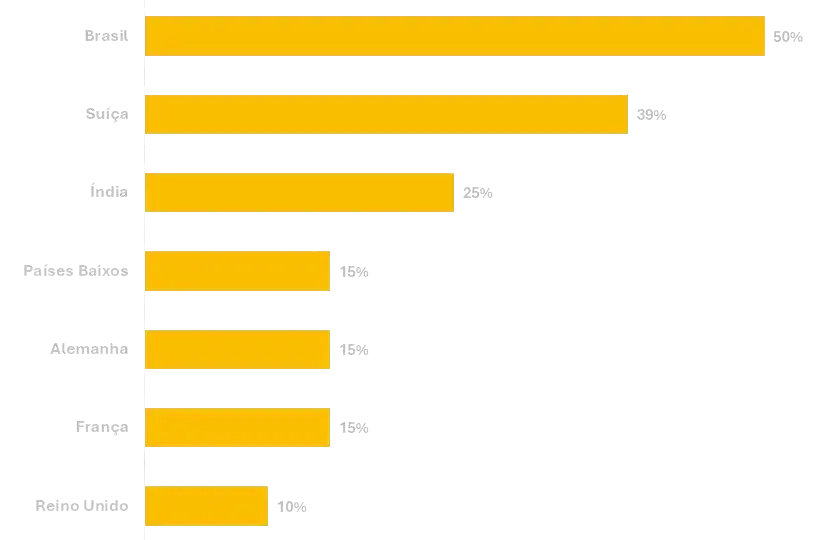
The year 2025 has been marked by rising protectionism in the United States, intensified by the tariff policies championed by Donald Trump. In response, countries with trade ties to the U.S. are seeking new alliances to mitigate potential economic damage. Even Washington's historical allies find themselves forced to rethink their foreign trade strategies. In this context, several trade agreements around the world (previously only considered) are gaining momentum and moving closer to becoming reality.
Tariffs Imposed by Donald Trump (Source: G1)
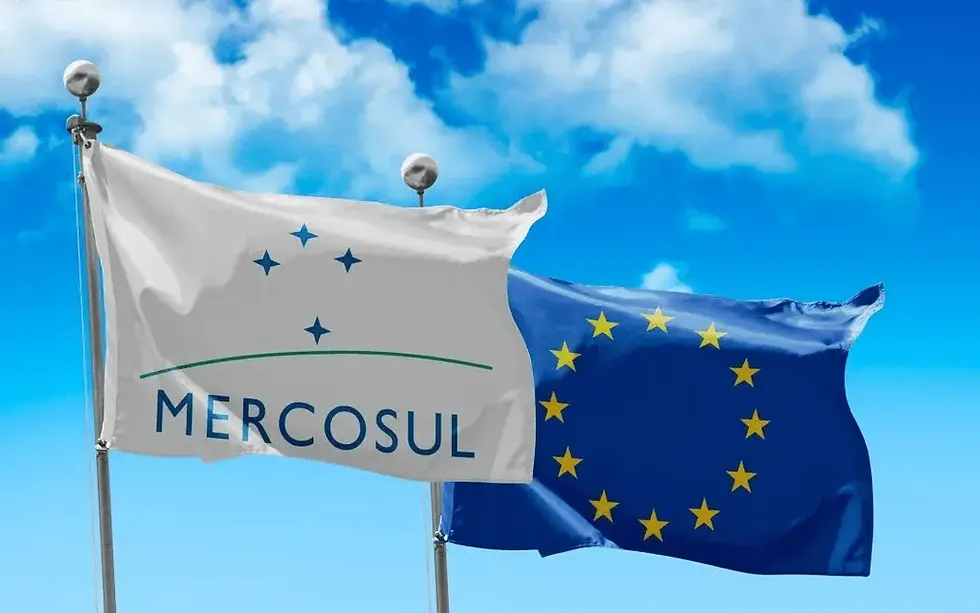
This is the case of the trade agreement between the European Union and Mercosur, which has never been so close to “seeing the light of day”. Since its first steps, back in 1994, the process has faced a series of obstacles that delayed its materialization. However, on December 6, 2024, the blocs announced the conclusion of technical negotiations, a significant step forward compared to previous years. The goal of the agreement is to boost trade between the two continents, reducing tariffs and facilitating interregional investment. Despite this, its implementation is not yet guaranteed, since countries such as France, Ireland and Poland have resisted ratifying the agreement, driven by concerns about the competitiveness of their sectors in the face of products expected to reach the continent at lower prices.
As for the products involved, Brazil is expected to export more commodities, such as soybeans, meat and fruit, while Europeans are expected to send higher value-added goods, such as machinery, chemicals and vehicles. Easier entry of these products into the Brazilian market may make the environment more competitive in some sectors, making it harder for certain domestic players to hold their ground. Interestingly, however, some Brazilian companies are likely to be less affected by this new scenario. One of these exceptions is Marcopolo.
In many countries, bus production is vertically integrated, with a single company responsible for both the chassis and the body. In Brazil, however, the sector operates differently: it is common for the chassis and the body to be manufactured by different companies. This fragmented model opens up space for specialized companies such as Marcopolo, one of the largest and most traditional bus body manufacturers in the country, with an international presence. The company manufactures bodies for intercity buses, urban buses and minibuses, in addition to operating the Volare segment, which offers models with its own in-house developed chassis.
With European players, which have greater technological development, gaining easier access to the Brazilian market, the question arises: how can Marcopolo take advantage of an opportunity created by this new scenario? The answer is directly related to the way the sector operates in Brazil.
In Europe, the vertical integration of production lines is no accident. One of the main means of interregional transportation on the continent is rail, which is much more developed than in Brazil. Thus, demand for buses is largely concentrated in the urban and school segments, categories that allow for greater standardization in production.
In Brazil, on the other hand, road transportation still plays a central role, whether due to cost or the absence of viable alternatives. In this context, body manufacturers such as Marcopolo have specialized in meeting extremely specific demands, with a high level of customization. This ability to adapt to customers' needs is precisely what may become a competitive advantage in the face of foreign competitors entering the market, since it is more feasible for chassis manufacturers to compete among themselves than to adapt their processes to compete with companies highly specialized in bus bodies.
However, the arrival of Europeans in the Brazilian market does not represent only opportunities for Marcopolo. One of the main risks is associated with the expansion of other modes of transportation.
With the agreement, imports of cars and spare parts are expected to increase, which tends to reduce the costs of individual transportation. In addition, lower prices for aircraft parts may reduce aircraft maintenance costs, lowering airfares. Both effects may make cars and planes more attractive options, especially for long trips, reducing demand for intercity bus travel, Marcopolo's main market.
Another relevant aspect worth mentioning concerns the electrification of Brazil's bus fleet. Although a complete transition is still a long way off, large urban centers such as São Paulo have already been investing in the adoption of electric buses. This market is still largely untapped in the country, but it has clear growth opportunities.
Attentive to this trend, Marcopolo developed its own line of electric buses, Attivi, with an in-house produced chassis. However, countries such as France, Germany and the Netherlands have greater experience and technological mastery in the sector, which may lead to the entry of European competitors with more competitive prices and more advanced solutions. In this scenario, there is a risk that domestic companies such as Marcopolo will be left on the sidelines of a strategic segment for the future of urban mobility.
In short, the progress of the agreement between Mercosur and the European Union represents a strategic opportunity for Brazilian foreign trade. For companies such as Marcopolo, this unprecedented scenario combines risks and possibilities: trade opening increases competition, but also favors those who know how to exploit specific niches and invest in innovation. In the end, the advantage will not lie in protecting the market, but in knowing how to adapt to the new rules of the game, and the game has already begun.


