

Private Equity: The Concept and How It Helps Companies Succeed

Well established abroad and expanding in Brazil, the PE sector stands out for the distinctive way it structures its deals.
Theo Tabach (Senior at GN Poli)

Those interested in the financial markets have probably come across Private Equity, a less popular field than Investment Banking, for example, but one with a very interesting way of operating. This type of investment targets private companies (with no shares listed on a stock exchange), usually at more established stages and with an already mature structure. PE firms seek significant stakes in these companies and work to enhance their value, later making a profit by selling that stake.
How does a Private Equity fund's approach work?
The first step is fundraising, carried out with institutional investors, such as other funds, insurance companies and high-net-worth individuals. Next, the fund managers evaluate companies with high growth potential and/or in need of restructuring, based on financial, operational and market analyses. If these analyses indicate profit potential from measures the managers can implement, the fund acquires a significant stake in, or even full control of, the company. This acquisition can take place through the direct purchase of shares or through a capital injection, always with the goal of gaining influence over management decisions.
In addition, there are different ways a PE fund can operate. The most common types of deals include: Buyout (purchase of a majority or all of the company), Growth capital (investment for expansion without the founders losing control) and Turnaround (investment in financially distressed companies, with the goal of restructuring and reviving them).
Private Equity Example – Opportunity and Santos Brasil
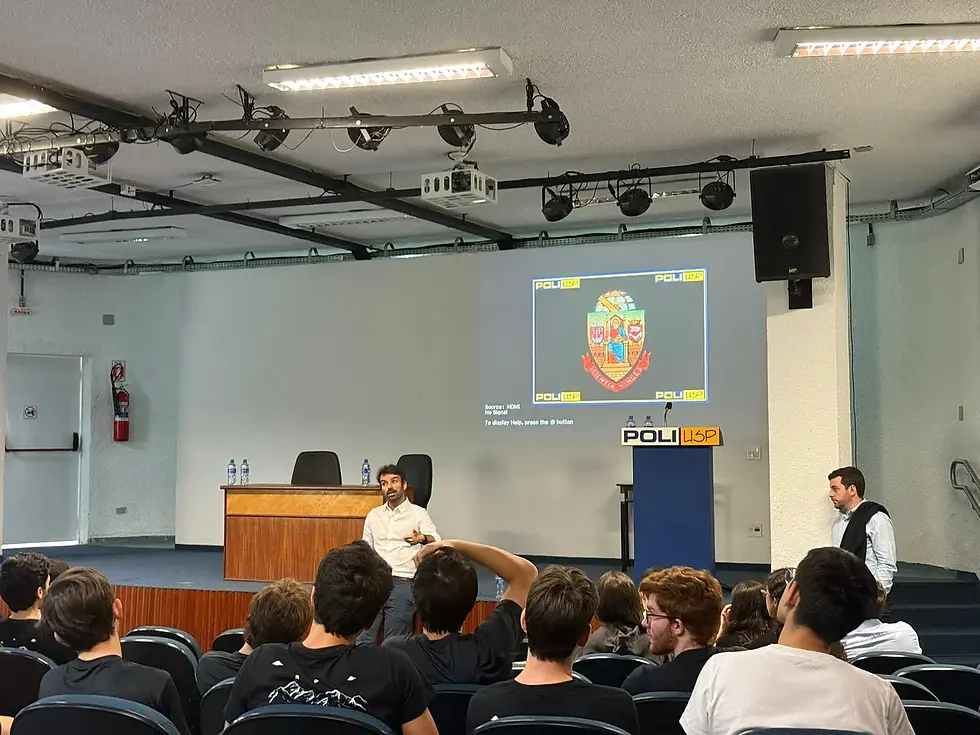
Talk: GN Poli and Opportunity (08/25/2025)
A major Private Equity deal took place in 1997 between Opportunity and Santos Brasil. The PE firm acquired about 48% of the company's shares in the initial transaction and in subsequent stakes, through funds that included the manager's own capital. This structure allowed for a long-term investment horizon, without the need for an immediate exit to pay out unitholders. The main objective was to expand the company's port infrastructure.
Under Opportunity's management, Santos Brasil evolved from a single terminal in Santos into a broad portfolio of logistics assets, including terminals in Itaqui (MA), Imbituba (SC) and Vila do Conde (PA), among others. The manager also played a decisive role in the development of Tecon Santos – the largest container terminal in South America – which led Santos Brasil to account for about 17% of all container traffic in the country.
In September 2024, Opportunity completed the sale of its 48% stake in Santos Brasil to France's CMA CGM for R$6.33 billion (equivalent to R$15.30 per share). The amount represented a premium of approximately 20% over the previous market price, reflecting the value created over the period. Despite lasting 27 years — far above the sector's typical average — the deal was considered a great success for both Santos Brasil and Opportunity. The case exemplifies how a Private Equity firm works: getting deeply involved in a company's management, driving its expansion and consolidating its path to success.
The Private Equity market in Brazil is still relatively small in terms of the number of firms and analysts, but it already moves significant amounts. Valued at around US$17 billion in 2024, the sector is projected to reach US$36.1 billion by 2033, with a CAGR (Compound Annual Growth Rate) of 8.72% between 2025 and 2033.


